_edited.png)
How to Choose and Work with a Memoir Developmental Editor

Memoir is the most personal form of nonfiction, and it is also one of the most structurally demanding. The challenge of memoir is not remembering what happened. It is deciding what your life experiences mean, which moments carry the weight of the story you are telling, and how to arrange them so a reader who was not there can understand not just the events but the person who lived through them.

A memoir developmental editor is a specialist in precisely this kind of structural and emotional work. And finding the right one, someone whose editorial instincts align with your story and whose approach to sensitive material you can trust, is a different search from finding an editor for a business book or a self-help guide.
This post walks you through what distinguishes memoir developmental editing from other forms of nonfiction editorial work, what a memoir editor specifically evaluates and why, how to find and vet an editor with genuine memoir expertise, how to navigate the handling of sensitive material in the editorial relationship, and what the collaboration looks like in practice once the engagement begins.
Memoir developmental editing sits within the broader scope of what developmental editing services actually cover, but the memoir context adds layers of emotional complexity, ethical consideration, and narrative craft that deserve their own focused treatment.
Why Memoir Developmental Editing Is Different From Other Nonfiction
The structural challenge of most nonfiction is intellectual: organizing an argument, sequencing evidence, making a complex subject accessible. The structural challenge of memoir is simultaneously intellectual and emotional: transforming private experience into a narrative that serves a reader who does not share that experience, while remaining honest to the truth that made the story worth telling.

This distinction shapes everything about how a memoir developmental editor reads a manuscript.
In business nonfiction or self-help, the editor asks whether the argument holds and whether the reader can follow it. In memoir, the editor asks those same questions and also asks: Does the author have enough distance from these events to shape them with intention? Does the reader understand not just what happened but what it meant? Does the emotional arc of the book have a resolution that earns the reader's investment?
These are not editorial questions any experienced editor can answer. They require someone who understands how memory, narrative structure, and emotional truth intersect specifically in memoir, a genre that Jane Friedman describes as requiring "the craft of fiction and the honesty of personal essay applied to real events that the author must simultaneously inhabit as a character and observe as a narrator."
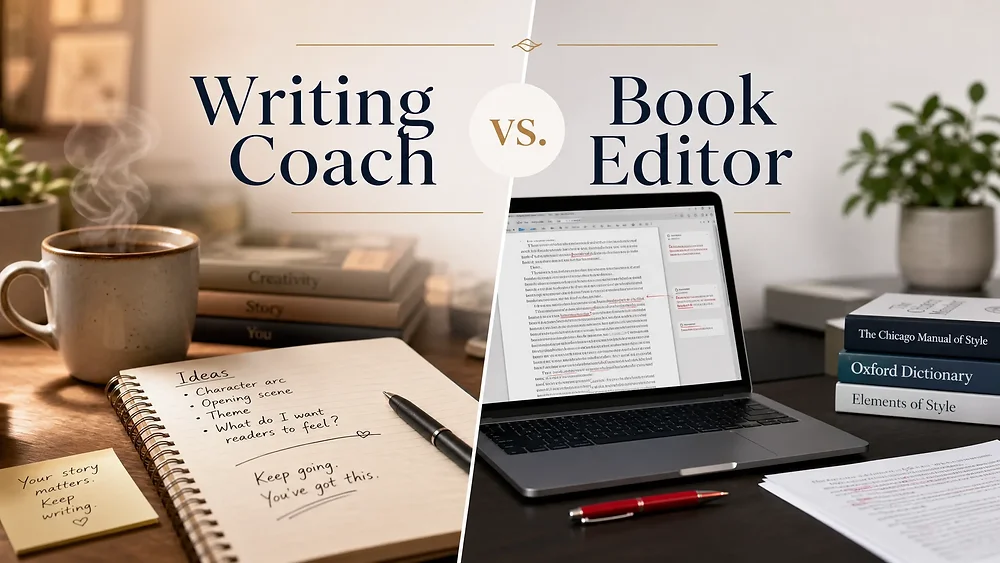
A developmental editor who has never worked in memoir often reads a memoir manuscript the way they would read an autobiography: a factual account of events in order. A memoir developmental editor reads it as a narrative with a protagonist, an emotional journey, a thematic through-line, and a resolution, applied to material that actually happened to a real person who will read every suggested revision personally.
Theme Versus Chronology: The Core Structural Challenge a Memoir Developmental Editor Solves
The single most common structural problem in first-draft memoirs is chronological organization applied to material that is not primarily chronological in meaning.
Most people write their first memoir draft the way they experienced the events: in order, from beginning to end. This makes intuitive sense. The problem is that chronological organization serves a diary. A memoir is not a diary. A memoir is a curated narrative built around what the events ultimately meant, not simply when they occurred.
A skilled memoir developmental editor evaluates whether your manuscript's structure is serving its meaning or just its timeline. This is a question with significant stakes. A memoir about grief organized strictly by the months following a loss may be accurate but emotionally flat compared to the same material organized around the stages of understanding that grief produced. A memoir about a professional transformation may serve its reader better by opening with the moment everything changed rather than the childhood that preceded it.
The structure of a memoir should be determined by its thematic purpose: what do you want your reader to understand, feel, or carry with them by the time they reach the final page? The chronology of events is raw material. The editor's job is to help you identify which arrangement of that material produces the most powerful version of the narrative you are trying to tell.
According to resources at The Memoir Network, the thematic versus chronological tension is the organizing question of memoir development. An editor who does not address this question with specificity and expertise is not providing the level of structural guidance memoir requires.
What does a memoir developmental editor specifically evaluate?
A memoir developmental editor evaluates structure, thematic coherence, emotional pacing, narrative arc, and the handling of memory, time, and perspective specific to memoir as a genre. They assess whether the manuscript is organized around meaning rather than chronology, whether the author's narrative voice maintains appropriate distance from events to shape them with intention, whether the emotional journey has a satisfying arc that serves the reader, and whether sensitive material is handled in a way that protects both the author and the people named in the book. They also evaluate whether scenes and reflection are balanced across the manuscript, and whether the reader has enough context to understand the significance of each experience.

What a Memoir Developmental Editor Specifically Evaluates
A memoir developmental editor reads your manuscript with a specific set of evaluative questions in mind. Understanding these questions before you submit helps you see your own work the way the editor will and make better decisions about what to revise before the formal edit begins.
Narrative voice and authorial distance: A memoir is told by a narrator who was also the person who lived through the events. The editor evaluates whether your narrator has enough perspective on those events to shape them purposefully, or whether the manuscript reads as a direct emotional account without the reflective layer that transforms experience into narrative.
Scene and reflection balance: Strong memoir alternates between scene, in which the reader inhabits the past experience directly, and reflection, in which the narrator makes meaning of what those experiences produced. An editor evaluates whether your manuscript leans too heavily toward one or the other: all scene produces a vivid but unresolved narrative; all reflection produces analysis without the grounded experience that earns it.
Emotional arc: Where does your narrator begin emotionally, and where do they arrive? The arc between those two points is the engine of reader investment in memoir. If the arc is unclear, circular, or absent, the manuscript may be moving the reader through experiences without moving them toward understanding.
Thematic through-line: Every memoir has a central question it is implicitly or explicitly asking and answering. The editor evaluates whether that question is clear from early in the manuscript and whether the material is consistently oriented toward its resolution.
The handling of other people: Memoir involves real people who did not consent to being written about. The editor evaluates whether the manuscript's portrayal of other people is defensible, fair, and necessary to the story, and may raise questions about privacy, consent, and potential legal exposure that the author needs to consider before publication.
According to the EFA's editorial service definitions, developmental editors address content, organization, and genre-specific considerations. In memoir, those genre considerations include all of the above, and they require an editor whose training and experience is specifically calibrated to memoir's unique demands.
How to Find a Memoir Developmental Editor Worth Trusting
The vetting process for a memoir developmental editor carries an additional dimension that other nonfiction vetting does not: you are not only evaluating editorial competence. You are evaluating whether you can be vulnerable with this person.
Memoir requires sharing experiences that may be painful, private, or still unresolved. An editor who has the right structural instincts but whose communication style makes it difficult for you to receive hard feedback, or who treats sensitive material with clinical detachment rather than care, will produce a working relationship that is technically adequate and personally draining.
Start with the standard vetting steps: verified memoir credits in the editor's portfolio, named testimonials from memoir authors you can cross-reference, and a sample edit of your pages. The posts on how to choose and vet a developmental editor and how to request a sample developmental edit walk through these processes in full.
Add to those steps a direct conversation about how the editor approaches sensitive material. Ask specifically: how do you handle content that is emotionally difficult for the author? How do you balance editorial honesty with psychological safety? Have you worked with authors writing about trauma, grief, or complex family relationships, and what did that process look like?
The answers to these questions reveal something the portfolio and sample edit cannot: whether this editor understands that memoir editing is not only a structural engagement but a human one.
Reedsy's guide to finding a memoir editor notes that genre specialization in memoir is one of the most significant differentiators between editors, partly because memoir's structural demands differ from fiction and from other nonfiction, and partly because the emotional dimensions of the work require specific training and sensibility that not every skilled editor has developed.
How is finding a memoir developmental editor different from finding a general nonfiction editor?
Memoir developmental editing requires genre-specific expertise that general nonfiction editing does not. A memoir editor evaluates not only structure and argument, as any developmental editor would, but also narrative arc, emotional pacing, scene and reflection balance, authorial distance, thematic through-line, and the handling of real people in the narrative. They also bring a psychological sensitivity to the editorial relationship that the vulnerability of memoir specifically requires. When vetting an editor for your memoir, ask directly about their memoir experience, request a sample on your specific pages rather than on a chapter from a business book, and have an explicit conversation about how they handle emotionally difficult material before signing any agreement.
How to Navigate Sensitive Material With a Memoir Editor
Memoir almost always involves material that is sensitive in some way: family relationships, personal trauma, professional failure, grief, illness, experiences of discrimination or injustice. Handling this material well in the editorial relationship requires clarity from both sides about what the collaboration is and is not.

A memoir developmental editor is not a therapist. The editorial relationship is a professional creative collaboration, not a counseling session. The distinction is worth maintaining, because conflating the two can produce an editorial dynamic where the editor's job becomes managing your emotional process rather than improving your manuscript. A good memoir editor holds space for the emotional weight of your material without being pulled into providing therapeutic support that is outside their expertise and outside the scope of the engagement.
At the same time, a memoir developmental editor who ignores the emotional dimensions of memoir editing is not doing the full job. The question of whether your manuscript handles its most difficult material in a way that serves the reader, not just the author, is a structural question. The question of whether a specific scene asks your reader to hold more emotional weight than the narrative has earned is a craft question. These are within the editor's scope, and a good memoir editor addresses them.
Literary Hub's essay on truth, memory, and editorial collaboration in memoir addresses the ethical and emotional complexity of this dimension directly: memoir requires the author to make decisions about truth and representation that no editor can make for them, but a skilled editor can provide the structural and craft context within which those decisions become clearer.
Before your engagement begins, establish these boundaries directly with your editor: what you are ready to receive feedback on, what areas are still too close to approach in this draft, and what you need from the working relationship in terms of communication style and check-in frequency during a demanding revision period.
Writing a memoir and ready for editorial guidance that understands the full scope of what your story requires? A memoir discovery call with Holly begins with your story, not a checklist. Book a conversation about where your manuscript is and where it needs to go. Schedule a Memoir Discovery Call
What to Expect from Your Memoir Developmental Editor
Once the engagement begins, a memoir developmental edit follows the same structural sequence as any developmental edit, with the specific evaluative lens applied throughout.
The editor reads the full manuscript twice. The first read forms the overall impression and identifies the large structural patterns: whether the thematic through-line is present and consistent, whether the narrative arc has a discernible shape, whether the emotional pacing serves the material. The second read is the annotated pass, where specific chapter-level and scene-level observations are made in the margin and the editorial letter is drafted.
The editorial letter for a memoir typically addresses theme and structure before anything else, then emotional arc, then scene and reflection balance, and finally voice and distance. It ends with a prioritized revision framework. As with all premium developmental edits, what you receive in the package is described in full in the post on what a premium developmental editing package includes.
What makes a memoir editorial letter distinctive is the care with which a skilled editor acknowledges the personal stakes of the material while maintaining the necessary clarity about what the manuscript needs. The best memoir editorial letters I have encountered hold both things simultaneously: they are honest about structural problems without being dismissive of the courage it took to put the experiences on the page in the first place.
How Writely Notable Works With Memoir Writers
At Writely Notable, memoir is not a genre category in a portfolio. It is the work I know most deeply and care about most consistently. The authors who bring me memoirs bring something irreplaceable: a story that exists nowhere else and belongs entirely to them.
The editing services at Writely Notable for memoir writers begin with understanding the story before addressing the structure. The memoir discovery call is a conversation about what your memoir is trying to do, what stage it is at, and what the editorial process will need to look like given both the manuscript's current state and your personal relationship to the material.
Memoir writers who want more reading on the writing and coaching dimensions of the process before deciding on an editorial engagement can find that context in the post on memoir writing help at Writely Notable, which covers the full arc of memoir development from first draft through to publication-ready manuscript.

Hiring and Working with a Memoir Developmental Editor: Frequently Asked Questions
Does my memoir need a developmental editor if I have a strong writing background?
Writing ability and memoir structure are related but distinct skills. Many accomplished writers produce first-draft memoirs with significant structural problems, not because they cannot write, but because the structural demands of memoir require a different kind of thinking than prose craft alone. A writer who produces clear, engaging sentences can still write a memoir whose thematic through-line is unclear, whose emotional arc is unresolved, or whose organization follows chronology rather than meaning. A developmental editor provides the outside perspective that identifies these structural patterns in a way that is genuinely difficult to see from inside the manuscript.
How do I know if my memoir is ready for a developmental editor?
Your memoir is ready for a developmental editor when you have a complete or near-complete draft and you have done at least one full revision pass on your own. Submitting a first draft that you know still has major work to do is less productive than completing your own revision first, since the editor's feedback will be sharper and more targeted when the manuscript reflects your best current thinking. If you are still in the drafting phase and need structural guidance before the draft is complete, a writing coach who works with memoir specifically is the more appropriate support at that stage.
Can a memoir developmental editor help me decide what to include and what to cut?
Yes, and this is often one of the most valuable aspects of the engagement. Memoir writers frequently struggle to cut material that is personally significant but that the narrative does not need. An editor provides the outside perspective to identify what serves the reader's journey through the story and what, however meaningful to the author, slows the narrative or dilutes the thematic focus. The editor does not decide what gets cut. The editor provides the analytical framework and the specific evidence that allows the author to make those decisions with clarity rather than anxiety.
What if my memoir involves living people who might object to being written about?
This is a question your memoir developmental editor will likely raise during the engagement, and it is worth being prepared to discuss. A developmental editor can flag content that may create legal or relational risk, but they cannot provide legal advice. If your memoir involves people who might object to their portrayal, consulting with a publishing attorney before finalizing the manuscript is advisable. In the editorial relationship, the conversation is about whether the portrayal of real people is necessary to the story, whether it is as fair as the narrative allows, and whether there are ways to handle the material that serve the book without unnecessary exposure.
Conclusion: Choosing and Work with a Memoir Developmental Editor
Your memoir is not just a record of what happened. It is the story of what it meant, shaped for a reader who needs to understand both. The work of a memoir developmental editor is to help you see the difference between those two things and build a manuscript that delivers the second with the honesty of the first.
The right editor brings structural expertise and emotional intelligence to this work in equal measure. They respect the courage it takes to write a memoir, and they serve the book by being honest about what it needs, even when that honesty requires difficult revision.
Your story is worth telling. A skilled memoir editor helps you tell it in a way that makes the telling worth reading.
Ready to talk about your memoir and what it needs to reach its full potential? Book a memoir discovery call with Holly and begin with a conversation, not a contract. Every memoir engagement at Writely Notable starts with understanding your story first. Schedule a Memoir Discovery Call
About the Author: Holly Totten
Holly Totten is a nonfiction writing coach and editor with over 30 years of experience in English education and the founder of Writely Notable and Gathered with Purpose. She has published three collaborative books and works one-on-one with nonfiction authors, memoir writers, and entrepreneurs to take their manuscripts from first draft through to publication-ready. Connect with Holly on LinkedIn or learn more on the About page.


Comments