_edited.png)
Manuscript Editing 101: The Difference Between Copyediting, Proofreading, and Developmental Editing

When you're writing a nonfiction book, memoir, or a collaborative project, manuscript editing is a critical step that transforms your initial draft into a polished, publishable work. But if you’re new to the publishing process, you might be wondering: What exactly is the difference between copyediting, proofreading, and developmental editing? Understanding these different types of editing will not only help you choose the right services for your manuscript but also ensure your book shines in every way.

I’m Holly Totten, a professional book coach and editor, and in this guide, I’ll walk you through the essential types of manuscript editing. By the end of this post, you’ll know which editing service you need and why each plays a unique role in your book’s journey.
Why Understanding Manuscript Editing Matters
Editing is not just about fixing typos. It’s a layered process that improves your book's clarity, flow, structure, and overall impact. Each type of editing addresses different aspects of your manuscript to help you create a compelling and professional final product.
When you know the difference between copyediting, proofreading, and developmental editing, you can:
Save time and money by hiring the right editor.
Avoid confusion about what to expect from each editing round.
Strengthen your manuscript’s content and presentation.
Feel confident about submitting your book to agents, publishers, or self-publishing platforms.
Let’s dive into the three main types of manuscript editing and how they differ.
What Is Developmental Editing?
The Big Picture Focus
Developmental editing is the first and often the most comprehensive stage of editing. It focuses on the big picture elements of your manuscript, including:
Structure and organization
Content relevance and completeness
Narrative flow and pacing
Character development (for memoirs or narrative nonfiction)
Logical consistency and clarity of ideas
Audience engagement and tone
What a Developmental Editor Does
As a developmental editor, I look at your manuscript as a whole. I ask questions like:
Does your book have a clear and compelling core message?
Are the chapters arranged in a logical order?
Is the content adequately supported with evidence or examples?
Are there any gaps or redundancies?
How does your manuscript connect with your intended audience?
When to Use Developmental Editing
You need developmental editing if:
Your manuscript feels unfinished or disorganized.
You want feedback on your book’s overall structure and message.
You're writing your first nonfiction book or memoir.
You want to ensure your manuscript resonates with your target readers.
Example of Developmental Editing Feedback
Imagine you wrote a memoir with a lot of great stories but no clear timeline or theme tying them together. A developmental editor might suggest reorganizing chapters by thematic arcs or chronological order, cutting some irrelevant sections, and strengthening your central message to create a cohesive narrative.
What Is Copyediting?

The Detailed Line-by-Line Polish
Once your manuscript’s structure and content are solid, copyediting steps in. This type of editing focuses on:
Grammar, punctuation, and spelling
Sentence structure and clarity
Consistency in style and formatting
Word choice and tone
Fact-checking and internal consistency (names, dates, numbers)
How Copyediting Differs from Developmental Editing
While developmental editing looks at the manuscript’s big picture, copyediting examines every sentence and paragraph to ensure accuracy and readability without altering the content’s foundation.
What a Copyeditor Does
A copyeditor will:
Correct typos, grammar mistakes, and awkward phrasing.
Ensure consistent use of terms, capitalization, and style (like serial commas).
Flag factual errors or inconsistencies.
Improve sentence flow and clarity.
When to Use Copyediting
Copyediting is essential when:
Your manuscript is structurally sound and complete.
You want to make sure your language is polished and professional.
You’re preparing your manuscript for submission or publication.
You want to maintain a consistent voice and style throughout your book.
Example of Copyediting Feedback
If your manuscript has sentences that are wordy or unclear, a copyeditor might rewrite them for conciseness and clarity. They’ll also correct mistakes like “their” vs. “there” and ensure consistent formatting throughout the text.
What Is Proofreading?
The Final Quality Check
Proofreading is the last stage of manuscript editing. It’s the final sweep to catch any remaining typographical, formatting, or minor grammatical errors before your book goes to print or digital publication.
How Proofreading Differs from Copyediting
While copyediting involves in-depth line editing, proofreading is a surface-level review. It does not address content or style but focuses on:
Misspelled words
Punctuation errors
Formatting inconsistencies (like font, spacing)
Minor typographical errors missed earlier
When to Use Proofreading
Proofreading is best when:
Your manuscript has already undergone developmental editing and copyediting.
You want to ensure a clean, error-free final version.
You’re preparing to upload your book to a publisher, distributor, or printer.
Example of Proofreading Feedback
A proofreader might catch a missing comma in a sentence or a formatting error like inconsistent chapter heading fonts that slipped through previous edits.
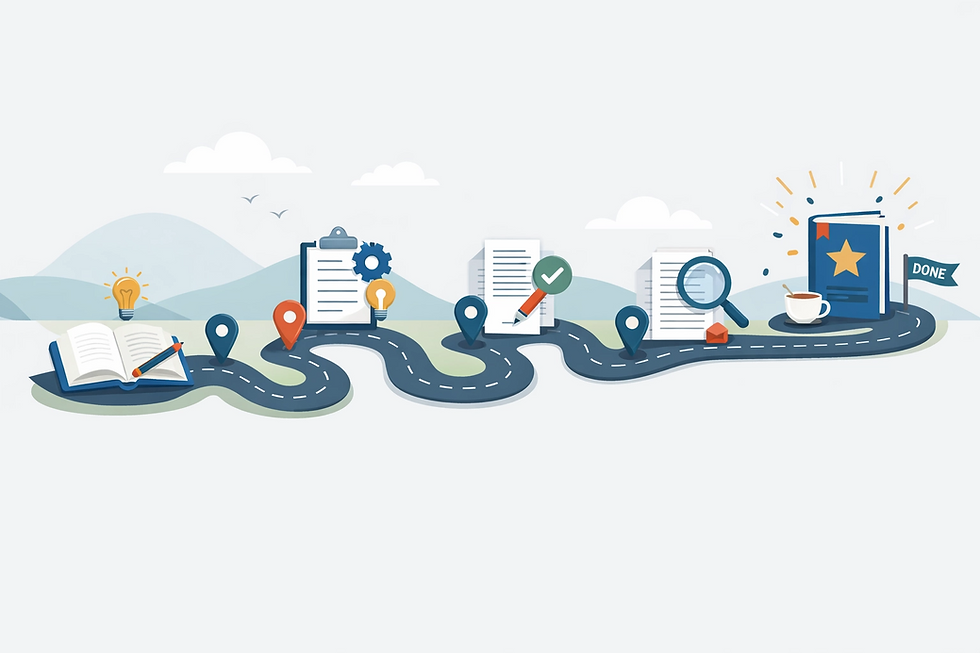
The Manuscript Editing Process: Step-by-Step
Understanding the differences is one thing, but how does the actual editing process work? Here is a typical sequence for nonfiction authors:
Step 1: Write Your First Draft
Your focus is on getting your ideas down on paper. Don’t worry about perfection yet.
Step 2: Developmental Editing
Hire a developmental editor to review your manuscript’s structure, content, and overall flow. You’ll receive detailed feedback and suggestions to revise your manuscript.
Step 3: Revise Your Manuscript
Incorporate the developmental editor’s feedback. This may require significant rewriting, reordering, or cutting content.
Step 4: Copyediting
After revisions, send your manuscript to a copyeditor for grammatical corrections, style consistency, and clarity improvements.
Step 5: Proofreading
Finally, have a proofreader do a final pass to catch any lingering errors before publication.
Assess Your Manuscript’s Needs
Is your manuscript complete but rough? Start with developmental editing.
Are you confident in your content but need professional language polishing? Opt for copyediting.
Have you already edited your manuscript thoroughly? Proofreading might be enough.
Consider Your Budget and Timeline
Developmental editing is the most time-intensive and costly, while proofreading is quicker and less expensive. Plan accordingly.

Look for Editors Experienced in Your Genre
Nonfiction, memoirs, and collaborative projects each have unique requirements. Choose editors who understand your genre and audience.
Ask for Samples and References
Review sample edits or request references to ensure an editor’s style aligns with your expectations.
Tips for Working With Editors
Be open to feedback, even if it’s challenging.
Communicate your goals clearly at the start.
Ask questions if you don’t understand suggested changes.
Take time to review edits carefully before accepting or rejecting.
Remember that editing is a collaborative process to elevate your manuscript.
Conclusion: The Difference Between Copyediting, Proofreading, and Developmental Editing
Understanding the different types of manuscript editing, developmental editing, copyediting, and proofreading, is essentialfor nonfiction authors who want to produce a polished and professional book. Each stage serves a unique purpose and builds upon the previous one to enhance your manuscript’s clarity, accuracy, and impact.
Whether you’re writing your first memoir, crafting a business book, or managing a collaborative nonfiction project, choosing the right editing services will save you time, money, and frustration. Remember, editing is a vital investment in your book’s success.
If you’re ready to take your manuscript to the next level, I invite you to Explore Editing Services with me. Together, we can craft a book that’s not only well-written but truly
notable.
Editing 101 Frequently Asked Questions (FAQs)
What is the difference between developmental editing and copyediting?
Developmental editing focuses on the overall structure, content, and flow of your manuscript, addressing big-picture elements like organization and clarity. Copyediting, on the other hand, works on a line-by-line basis to correct grammar, punctuation, spelling, and style consistency without changing your manuscript’s core content.
Can I skip developmental editing if I’m confident in my manuscript?
While you can skip developmental editing, it’s highly recommended, especially for first-time nonfiction authors. Developmental editing ensures your manuscript’s foundation is strong and your message clear before moving to the polishing stages.
How many rounds of editing does a manuscript usually need?
Most manuscripts benefit from at least two rounds: one developmental and one copyediting. Some authors also use multiple rounds of copyediting and proofreading, depending on the book’s complexity and their publishing goals.
When should I hire a proofreader?
Hire a proofreader after all other editing stages are complete. Proofreading is the final quality check before publishing to catch any last-minute errors or formatting issues.
What’s the difference between an editor and a proofreader?
An editor offers in-depth feedback on content, structure, and language, while a proofreader provides a final check for typos and formatting errors without altering content.
How do I know if my manuscript is ready for copyediting?
If your manuscript has a clear structure, coherent content, and you’re satisfied with the overall message and flow, it’s ready for copyediting. It should be as close to final as possible to avoid costly rework.
About the Author: Holly Totten
Holly Totten is a professional book coach, editor, and the founder of Writely Notable and Gathered with Purpose. With years of experience guiding aspiring authors from blank page to published book, Holly specializes in nonfiction, memoirs, and collaborative writing projects. She believes that everyone has a story worth telling and provides the structural guidance, editorial polish, and emotional support needed to bring those stories to life.
Whether you're writing your first book, preserving your family legacy, or publishing a collaborative project with your organization, Holly is dedicated to helping you write notably.


Comments